Both infrared and traditional saunas have their unique benefits. Let's explore the differences in depth to help you make the best choice for your needs and preferences.
How do the two types work?
To understand which sauna is best for you, it's important to understand how the two types work in fundamentally different ways. Both achieve the same goal - to warm up your body and provide you with health benefits - but the methods and experience are very different.
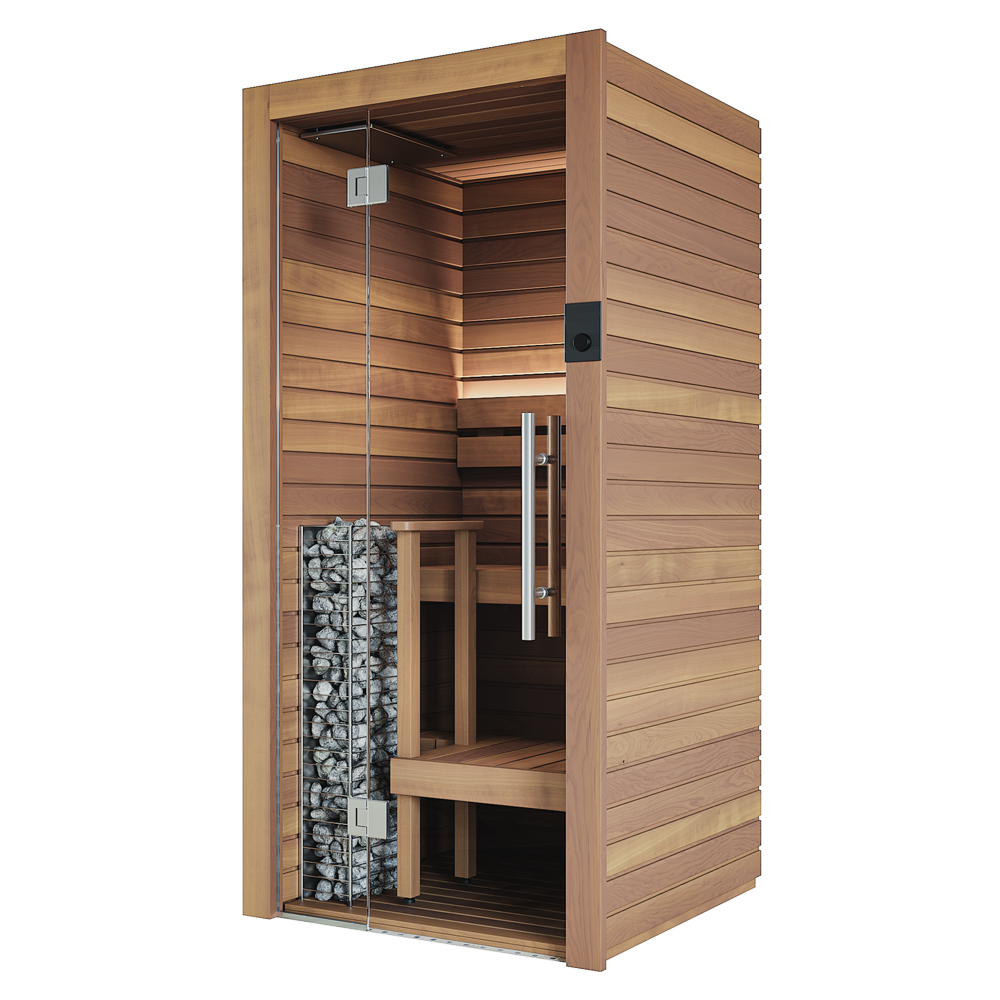
Traditional sauna, also known as Finnish sauna, uses high temperature (70-100°C) combined with low humidity (10-20%). An electric heater heats special sauna stones to 400-500°C, which in turn heats the air in the room. Your body is heated through convection - the warm air around you. When you throw water on the stones, steam (løyly) is created, which temporarily increases the humidity and provides a more intense heat experience.
Infrared saunas work completely differently. They use lower temperatures (45-65°C), but the heat comes directly from infrared panels that emit electromagnetic radiation. This radiation penetrates 3-4 centimeters into the skin and heats tissues and muscles directly from the inside, without heating the air as much. This provides deeper heat penetration while the air temperature remains more comfortable.
Traditional sauna (Finnish sauna)
Uses high temperature (70-100°C) and low humidity (10-20%). The heat comes from heated stones that heat the air in the room. Your body is heated through convection - the warm air around you.
How it works:
- Electric oven heats the stones to 400-500°C
- The stones heat the air in the sauna room.
- Warm air circulates and warms the body from the outside
- Water is thrown on the rocks to create steam (løyly)
Advantages:
- Authentic, traditional sauna experience
- Possibility of leeway (steam) which increases intensity
- Rapid warming of the whole body
- Social activity - space for several people
- Cultural and historical significance
Infrared sauna
Uses lower temperatures (45-65°C) and heats the body directly with infrared radiation. The heat penetrates deeper into the tissue without heating the air as much.
How it works:
- Infrared panels emit electromagnetic radiation
- The radiation penetrates 3-4 cm into the skin
- Warms tissues and muscles directly from within
- The air temperature remains relatively low
Advantages:
- Lower temperature, easier to tolerate
- Deeper heat penetration into muscles and joints
- Faster heating of the sauna (10-15 min)
- Lower energy consumption
- Less strain on the cardiovascular system
Detailed comparison
Traditional and infrared saunas are quite different. Traditional saunas are much hotter (70-100°C) than infrared (45-65°C). They also take longer to heat up - a traditional sauna needs 30-45 minutes, while an infrared only needs 10-15 minutes.
Traditional saunas use more electricity and cost more to install. They also require more maintenance. Infrared saunas are cheaper to install and operate, and require almost no maintenance.
In terms of space, traditional saunas can accommodate many people (2-8 or more). Infrared saunas are smaller and best suited for 1-4 people.
Health Benefits - A Deeper Analysis
Both types of sauna provide significant health benefits, but in slightly different ways. Research shows that regular sauna use can have positive effects on both physical and mental health, and studies from Finland - where sauna is part of the culture - give us valuable insight into the long-term effects.
When it comes to cardiovascular health, studies show that traditional saunas can reduce the risk of heart disease by 20-30% with regular use. The high temperature causes the heart to pump faster, which provides a training effect for the cardiovascular system. Infrared saunas also have positive effects on circulation and can help lower blood pressure, but in a gentler way that may be better suited for people with cardiovascular problems.
For muscle healing and pain relief, the two types have slightly different strengths. Traditional saunas are great for general relaxation and stress reduction, and the intense heat can help loosen up stiff muscles. Infrared saunas, with their deeper heat penetration, can be especially effective for chronic muscle pain and joint problems, as the heat reaches deeper into the tissue.
Both types promote detoxification through intense sweating. Traditional saunas often produce more intense sweating that removes toxins through the skin, while infrared saunas can mobilize toxins from deeper tissues and fatty tissue. On a mental level, traditional saunas often provide a more meditative, social experience, while infrared saunas offer a calmer environment that may be better for people who are sensitive to high temperatures or need a more private experience.
Who is each type suitable for?
The choice between a traditional or infrared sauna depends on your personal needs, health condition, and preferences. Here's a guide to help you decide.
Traditional sauna is suitable for you who: Likes a real sauna with high heat and intense heat. Wants to share the experience with family and friends. Loves to throw water on the stove for steam (løyly) and follow old sauna traditions. In good health and tolerates heat well. Has both space and money for a larger sauna. Wants to sweat properly to cleanse the body.
Infrared sauna is suitable for you who: Are new to saunas or can't tolerate strong heat well. Have heart problems or low blood pressure. Want to save electricity and have the sauna ready quickly. Struggle with sore muscles or joints. Prefer to bathe alone or in peace and quiet. Have little space or tight finances. Don't want to spend time on maintenance.
Costs and practical considerations
Beyond the sauna experience itself, it is important to consider the practical and financial aspects of the two types.
Installation costs
Traditional: 150,000 - 500,000 kr (depending on size and quality)
Infrared: 50,000 - 200,000 kr (generally lower cost)
Operating costs (annual)
Traditional: 3,000 - 8,000 kr (higher energy consumption)
Infrared: 1,500 - 4,000 kr (lower energy consumption)
Maintenance costs
Traditional: 2,000 - 5,000 NOK/year (stone replacement, wood treatment)
Infrared: 500 - 1,500 NOK/year (minimal maintenance)
Environmental impact
In today's environmentally conscious society, it is also worth considering the environmental impact of the two types of sauna.
Energy efficiency: Traditional saunas use more electricity but last longer. Infrared saunas use 30-50% less electricity.
Materials: Traditional saunas are built from natural materials and sustainable wood. Infrared saunas have more electronics but use less wood.
Future trends
Hybrid saunas
New models combine traditional heat with infrared technology, giving you the option to choose between or combine both methods.
Smart technology
App control, automatic temperature control and personal programs are becoming increasingly common in both sauna types.
Our advice: The choice depends on your personal preferences, health, budget, and usage patterns. Infrared saunas are often better for beginners and those with health issues, while traditional saunas provide the authentic experience and are better for social gatherings. Both offer excellent health benefits when used correctly and regularly.